

By Ahmed Tahir AJOBE
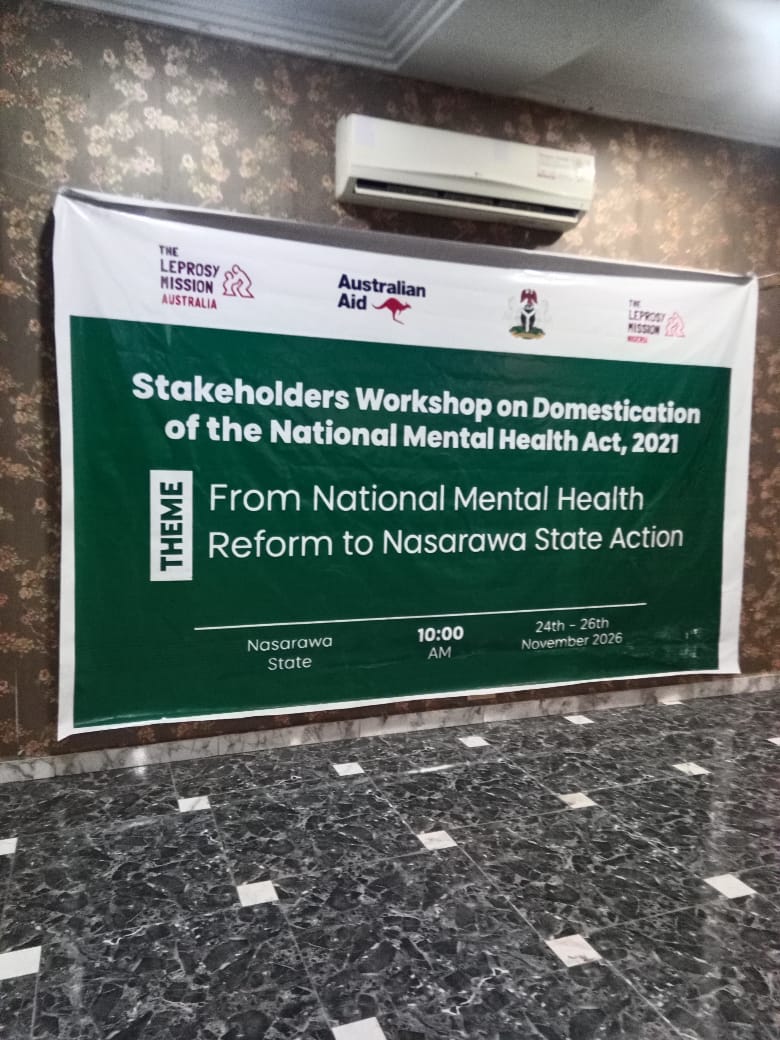
The Leprosy Mission Nigeria (TLMN) is supporting Nasarawa State to domesticate the National Mental Health Act 2021, as the state commenced a three-day workshop on the domestication, technical review and validation of its Mental Health Bill and Policy in Lafia.
The workshop brings together representatives of the Federal Ministry of Health and Social Welfare, the Nasarawa State Ministry of Health, the Ministry of Justice, the Nasarawa State House of Assembly, development partners, civil society organisations, persons with lived experience, caregivers, and the media.
It is a major step towards providing legal backing and rights-based care for persons with mental health conditions in the state.
Declaring the workshop open, the Director of Public Health, Nasarawa State Ministry of Health, Dr. Peter Attah, said mental health could no longer be treated as an afterthought in the health system.
“We are here because mental health can no longer be treated as an afterthought in our health system. In Nasarawa State, too many of our people suffer in silence. Too many families carry the burden alone. Too many health workers do their best without a clear legal framework, without adequate policy backing, and without the tools to provide dignified, rights-based care,” Attah said.
He described the workshop as an opportunity to change the narrative, noting that it came at a very significant moment for the state.
According to him, just last week, the 67th National Council on Health concluded its meeting in Lafia under the theme “From Commitments to Results”, where the Council approved the integration of essential mental health services — for depression, anxiety, alcohol use disorder, epilepsy and psychosis — into Primary Health Care across the 36 states and the FCT.
“That is a clear national directive. Mental health is central to Primary Health Care, to Universal Health Coverage, and to the health of all Nigerians,” he said.
Attah explained that the three-day engagement was structured to move from understanding to action. Day One is devoted to building a shared understanding of the National Act, domestication and the mental health landscape in Nasarawa State.
He charged participants to be guided by three principles throughout the deliberations: Rights and Dignity, Practicality, and State Ownership.
On rights, he insisted that every provision must protect the dignity and human rights of persons with mental health conditions.
On practicality, Attah warned that a beautiful Bill that cannot be implemented would be of no use, stressing that every clause must be aligned with what institutions can do, what the workforce can deliver, and what the budget can sustain — while still being ambitious.
On ownership, he said that although partners were welcome, final decisions and accountability rest with the Government and people of Nasarawa State.
He said the state’s culture, multilingual nature, and multi-religious character must be factored into the Bill and Policy.
Attah specially welcomed partners from TLMN, legal experts from the Ministry of Justice, legislators, and most importantly, persons with lived experience and caregivers.
He committed, on behalf of the Ministry of Health, to provide leadership and follow-through to ensure the work does not end at the workshop. He said the Ministry would work with the Ministry of Justice to finalise the Bill, and with the Ministry of Finance and Budget to cost the Policy.
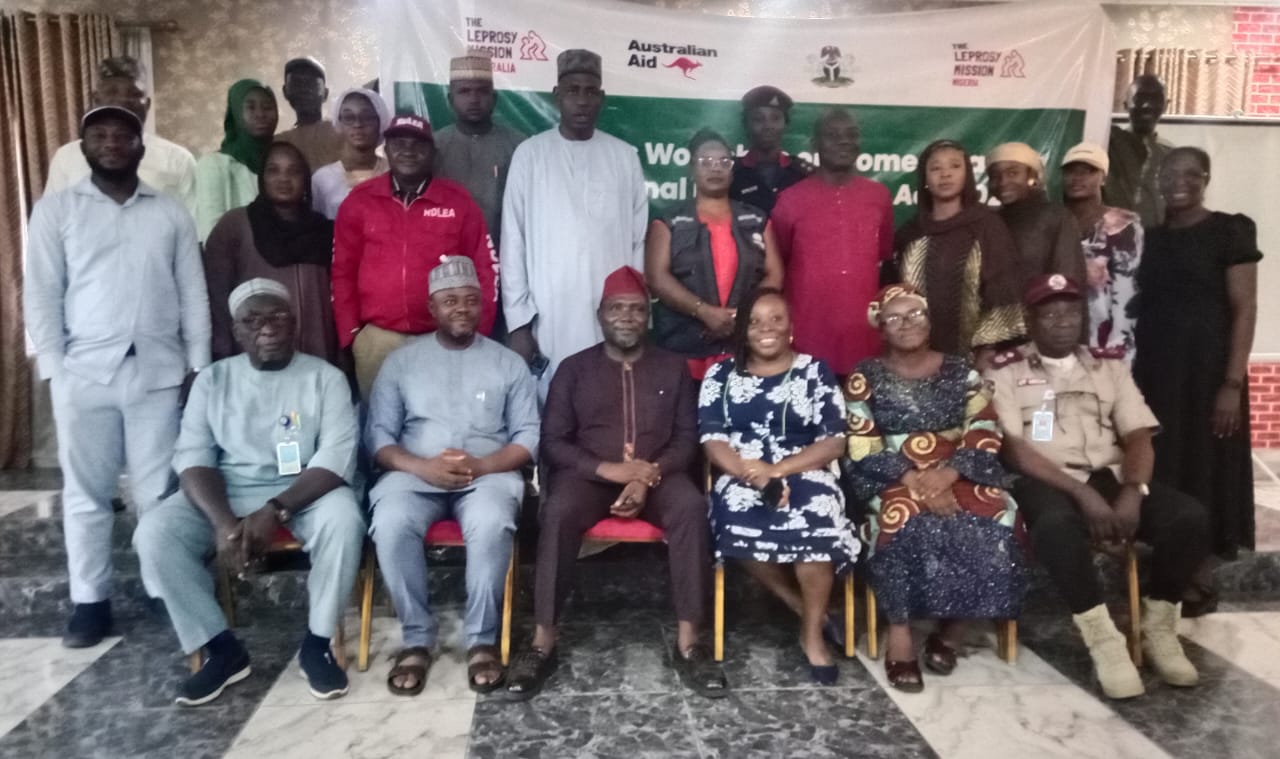
He also disclosed that after the workshop, a smaller validation session involving about 10 key stakeholders, including the House of Assembly and Ministry of Justice, would be convened to finalise the Bill before transmission to the State Executive Council for ratification and onward passage to the House of Assembly.
TLMN: From care to policy reform
Also speaking, the Lead Facilitator, Dr. Ameh Zion Abba, said the workshop, supported by TLMN, was aimed at ensuring Nasarawa State domesticates the National Mental Health Act 2021 and develops its own Mental Health Policy.
“Mental health is no longer a sidelined subject in the health sector. It has become paramount. It is a governance issue. It is a human rights issue, and everyone living with a mental health condition, illness, or disorder must have their care prioritised,” Abba said.
He said Day One was focused on helping participants understand the key provisions, rights and dignity enshrined in the National Mental Health Act, so they can understand the rights of Nasarawa State indigenes.
Abba noted that several states, including Lagos, Kaduna and Ekiti, have already domesticated the Act, while Benue State is currently being piloted by TLMN. He said Nasarawa was now joining the list, not as a political achievement, but for the wellbeing of the people.
He described the mental health burden in the state as a cause for concern, citing cases of depression, anxiety disorders, panic attacks, schizophrenia, substance use disorders, and postpartum depression among pregnant women.
“There cannot be health without mental health. It is of necessity that issues like these, in terms of policies, legislations and frameworks, happen because we have people in Nasarawa State coming down with mental health disorders,” he said.
He added that the domestication would also provide a framework for mental health financing at the state level, increased budgetary allocation, research and data, and improvement of the mental health workforce.
Abba listed stakeholders at the workshop to include officials from the Federal and State Ministries of Health, Ministry of Education, Health Management Board, Primary Health Care, NDLEA, Road Safety, civil society organisations, religious leaders, NGOs and persons with lived experience.
He said religious leaders were critical stakeholders because they are often the first point of call for many people, and must be well-informed on policies and rights.
Attah urged participants to be open, honest, and practical in their deliberations.
“Speak. Contribute. Challenge where necessary. Build consensus where possible. Let us leave here with a validated Bill, a validated Policy, and a clear roadmap,” he said.
BACKGROUND TO THE ACT
For more than six decades, Nigeria’s mental health system was governed by the Lunacy Act of 1958 — itself a successor to the colonial Lunacy Ordinance of 1916.
The old law was widely condemned as outdated and inhumane. It focused on detention and control, rather than treatment, recovery and rights, and allowed medical practitioners and magistrates to detain people described as “lunatics.” Advocates argued for years that it violated the human rights of persons with mental illness.
The push for reform began in 2003, when a Bill to repeal the Lunacy Act was first proposed in the National Assembly. It failed in 2003 and again in 2013.
It was not until 2021 that the Senate and House of Representatives harmonised a new Bill. President Muhammadu Buhari signed it into law on 5 January 2023 as the National Mental Health Act, 2021 — the first mental health law in Nigeria since independence.
The Act marked a fundamental shift: from custodial care to rights-based, community-based care.
Its key provisions include:
• Protection of rights: Prohibition of discrimination in housing, employment, healthcare and other services for persons with mental health conditions • Ban on degrading treatment: Prohibition of chaining, seclusion, forced therapy and other forms of inhumane confinement • Informed consent and confidentiality: Persons must consent to treatment, except in strictly defined emergency circumstances, and their information must be protected • Institutional framework: Creation of a Department of Mental Health Services in the Federal Ministry of Health, a Mental Health Fund, and a Mental Health Assessment Committee to handle appeals and complaints • Integration into PHC: Integration of mental health services into Primary Health Care and general health services
But because health is on the Concurrent Legislative List, the National Act does not automatically apply in states. Each state must domesticate it — pass its own law and policy that adapts the national provisions to its own institutions, workforce and budget.
Progress has been slow. As of recent reporting, only a handful of states — including Lagos and Ekiti, with Kaduna also cited by facilitators in Lafia — have domesticated the Act, while many others have yet to do so. Stakeholders have also pointed out that even at federal level, key mandates of the Act, including the Department and the Fund, remain unfulfilled more than three years after enactment.
That is why workshops like the one in Nasarawa matter: without domestication, costing, and a state policy, the national law remains largely on paper.
THE LEPROSY MISSION NIGERIA AND MENTAL HEALTH
The Leprosy Mission Nigeria (TLMN) began as a leprosy-focused organisation, but its work has increasingly expanded into mental health — because of what it saw in the field.
People affected by leprosy and other Neglected Tropical Diseases (NTDs) such as lymphatic filariasis and Buruli ulcer face high levels of stigma, discrimination, visible disability, loss of livelihood and social exclusion. TLMN and its partners found this was driving high rates of depression, anxiety and loss of self-worth among affected persons.
That link — between skin NTDs, stigma and mental health — became the foundation of TLMN’s mental health work:
1. The Mind-Skin Link / Neglected Mind-Skin Link Project
In partnership with CBM Global and the University of Jos, TLMN piloted integrated NTD and mental health care in Benue State, in Gboko and Konshisha LGAs. The project assessed the feasibility of integrating mental health care into Primary Health Care services for people with NTDs.
The research mapped depression and anxiety among people living with leprosy and lymphatic filariasis and developed a practical, person-centred model for linking communities to mental health services.
2. The Farinciki (Inner Peace) Project
Launched in 2023, Farinciki focuses on psychosocial support for persons affected by leprosy and other NTDs, promoting community-led care and inclusion. Its second phase, Farinciki 2.0, was launched to strengthen psychosocial support and tackle the wider mental health burden.
3. Open Minds Project
A four-year project focused on children and young people affected by leprosy and NTDs. It supports young people in FCT, Sokoto and Kebbi to build resilience and address high rates of depression and anxiety resulting from stigma.
4. From Service Delivery to Policy Reform
TLMN’s experience in communities convinced it that services alone were not enough without law and policy. The Federal Ministry of Health has publicly acknowledged TLMN among partners who supported the passage and assent to the National Mental Health Act 2021.
TLMN is now using that experience to support states to domesticate the Act — starting with Benue State as a pilot, and now Nasarawa State.
In Nasarawa, as in Benue, the approach is the same: bring together government, justice, legislature, health workers, religious leaders, civil society, and crucially, persons with lived experience and caregivers — to produce a Bill and Policy that is rights-based, practical, and owned by the state.
