
By Mannir Bature
Nigeria’s health sector is at a critical juncture. Faced with a worsening human resource crisis, the country continues to lose thousands of skilled medical professionals annually—driven not just by the allure of better opportunities abroad, but by a search for professional dignity, safety, and fair treatment at home. In the midst of this crisis, recent actions by the Federal Government of Nigeria particularly a circular recently issued by the National Salaries, Incomes and Wages Commission (NSIWC) have deepened concerns about the government’s commitment to its healthcare workforce.
The circular, which proposes revisions to the allowances under the Consolidated Medical Salary Structure (CONMESS), has raised more questions than it answers. For many in the medical community, this move feels not only abrupt but deeply disappointing-especially following years of sustained advocacy, negotiation, and goodwill. Rather than reflecting progress, the unilateral nature of the directive risks undermining trust and morale at a time when both are in desperately short supply.
It is worth asking: does this decision align with the spirit and goals of the Renewed Hope Agenda championed by the current administration?
Our hospitals are already grappling with extreme staff shortages and an overwhelming patient load—a direct consequence of the accelerating brain drain known as the “Japa” phenomenon. According to the World Health Organization, over 2,000 Nigerian doctors migrate annually. With just over 55,000 doctors serving a population of more than 220 million, our doctor-to-patient ratio stands at 1:5,000—alarmingly below the WHO’s recommended 1:1,000. This imbalance severely compromises the country’s ability to provide quality care and directly contributes to high maternal and child mortality rates.
In this context, policy decisions that appear to sideline or diminish the value of healthcare professionals send the wrong signal. The issuance of the recent NSIWC circular, reportedly without due consultation or stakeholder engagement, also raises serious legal and ethical concerns.
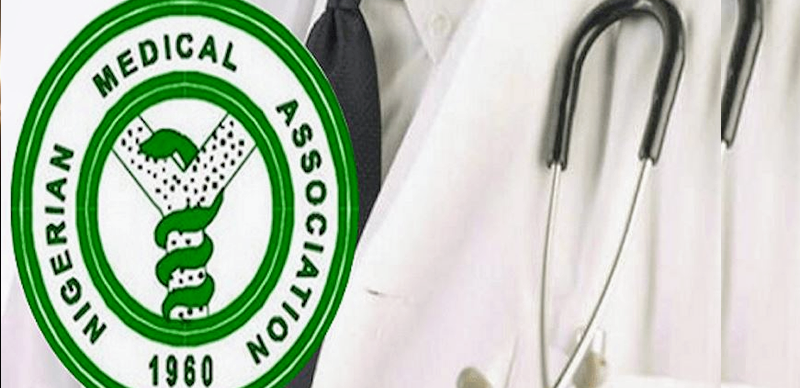
Agreements made in 2001, 2009, and 2014 after long and difficult negotiations must be respected if the government hopes to maintain stability in the sector. The Nigerian Medical Association (NMA) and its affiliates are not merely protesting for improved remuneration for their members. They are calling for fairness, dialogue, and respect for the principle of collective bargaining.
This issue is not only about compensation. It is fundamentally about dignity, professional respect, and the protection of lives-both of patients and those who serve them. Nigerian doctors face immense challenges daily. Many endure months of unpaid salaries, unsafe working conditions, harassment, and even physical danger. They are harassed, assaulted, and sometimes kidnapped from their duty posts. And still, they show up every day because someone has to. Their resilience is commendable, but it must not be taken for granted.
We are approaching a tipping point. If conditions remain unchanged, we risk losing even more of our brightest minds to other nations, potentially leaving our healthcare system unable to cope with even the most basic demands. When medical professionals feel undervalued or unprotected, the ripple effects are felt by every citizen.
The NMA’s rejection of the NSIWC circular is not an act of defiance. It is a principled stand for the future of healthcare in Nigeria. Doctors are not asking for luxury; they are asking for promises to be kept, for dignity to be preserved, and for their critical role to be recognized in both policy and practice.
To the Federal Government: This is a moment for reflection and decisive leadership. Withdraw the circular. Engage constructively with medical stakeholders. Uphold existing agreements. Above all, recognize that investing in your doctors is not a cost but a necessary foundation for a healthy, functioning nation.
The time for rhetoric has passed. What is required now is action-bold, compassionate, and responsible. The best time to act was yesterday. The next best time is today.
Dr. Bature is the National Publicity Secretary, Nigeria Medical Association (NMA).
