

By Amina Mohammed, Lafia
Muslim women leaders have called on politicians to view leadership as amanah — a sacred trust — as Nigeria approaches another election cycle.
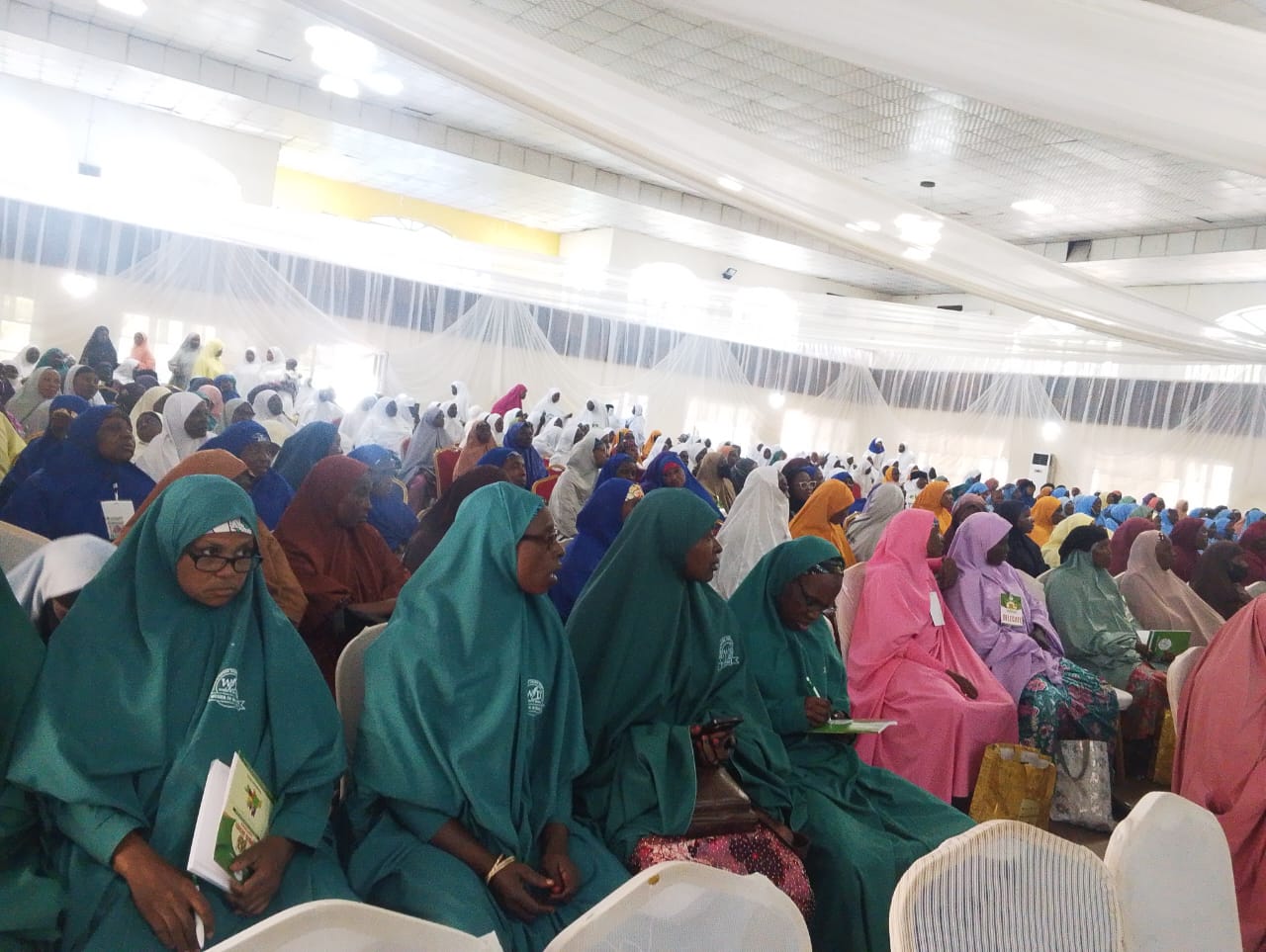
The appeal was made at the 19th Annual National Conference of Women in Da’awah, held at Ta’al Conference Hall in Lafia, Nasarawa State. The gathering drew Muslim women leaders and scholars from across the country to discuss justice, politics, and leadership in contemporary society.
National President of Women in Da’awah, Hajiya Maryam Idris Othman, said the conference theme was chosen to reflect the urgency of political education for women ahead of the polls.
“Every year, we look at the major issue of the time and bring our women together to discuss it,” Othman said. “This year, we are focusing on justice, politics, and leadership. With elections approaching, we feel it is the right time to educate our women on the importance of political participation — and on doing it the right way.”
She added that delegates are expected to replicate the discussions in their states and local government areas. For Muslims, she noted, leadership must be strictly guided by the Qur’an and Sharia.
Speaking on the role of women in nation-building, the organization’s Deputy Secretary from Bauchi State, Malama Juwayriya Usman Suleiman, said shaping women along Islamic principles directly impacts society.
“Think of everything — leadership, being the best woman at home, raising honest children. Every aspect of life is affected. That is why we are here,” she said.
In his paper, “Reclaiming Leadership as Amanah: Reframing Authority as Responsibility in Islam,” Kaduna-based judicial officer Murtala Nasir challenged the perception of leadership as a pathway to privilege and wealth.
“Our problems start when we forget that leadership is service. A leader is a servant of the people. We have to reframe our thinking,” Nasir said.
He cited Prophet Muhammad (SAW) as a model of service-driven leadership, noting that the Prophet led by personal example and was often first to respond during crises in Medina.
Nasir argued that citizens also contribute to political corruption by misunderstanding the constitutional roles of elected officials. When constituents demand money from lawmakers for personal expenses or social events, he said, it creates financial pressure that encourages politicians to view office as an investment to be recouped from public funds.
Effective leadership, speakers agreed, must begin at home. Delegates were urged to model moral behavior in their communities to ensure the next generation is grounded in Islamic values before entering public life.
