

By Abubakar Yunusa Ojima-Ojo
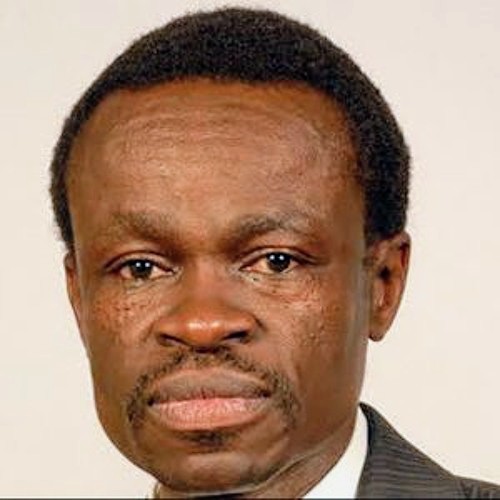
Renowned Pan-African scholar and legal expert, Professor Patrick Otieno Lumumba, has warned that Africa will continue to suffer political instability and underdevelopment if tribalism remains a tool for political mobilisation.
He made this assertion on Tuesday at the International Conference on Africa’s Democracy (ICAD) 2025 in Abuja, Nigeria.
Themed “Building Governance Systems that Work in Africa for Africans”, the gathering brought together policy makers, civil society leaders, scholars and youth from across the continent.
Lumumba, a respected public intellectual and former Director of the Kenya Anti-Corruption Commission, said tribalism has become a corrosive force in African politics, weaponised by opportunistic leaders.
“The tribe is innocent,it is the tribalists who are guilty.”Lumumba stressed.
He warned that ethnic mobilisation for political gain has kept Africa divided and distracted from tackling critical issues such as poverty, insecurity and bad governance.
Lumumba acknowledged Africa’s cultural diversity but argued that it must never form the foundation of political competition or governance systems.
“We celebrate our differences, but we cannot allow ethnicity to be the basis of political mobilisation,” he said.
According to him, colonial powers deliberately sowed seeds of ethnic division through their “divide and rule” strategy, which continues to haunt the continent.
He referenced the Berlin Conference of 1884–1885, where European nations partitioned Africa into arbitrary colonies, ignoring ethnic, cultural, and historical ties among African peoples.
“They told the Hausa and the Fulani one thing, the Igbo another, and sowed mistrust among us,” he said.
The Kenyan professor called on African leaders and citizens to reject the colonial legacy of ethnic competition and instead build inclusive, accountable systems rooted in African traditions of governance.
He cited indigenous governance structures such as the Oromo Gadaa system in Ethiopia and the continued reverence for traditional rulers like the Emir of Kano and the Oni of Ife as proof that African models can coexist with modern governance.
“Something must have been good about our traditional systems,” Lumumba remarked.
“We must build from within, not import.”
He also lamented how modern politics in Africa is plagued by what he called “kakistocracy” – governance by the least qualified.
According to him, elections across the continent have often failed to deliver good leadership, noting that “the ballot does not always deliver democracy.”
Lumumba challenged young Africans to take ownership of the continent’s future but advised them to learn from the wisdom of elders, warning that “age does not make one intelligent – only wisdom does.”
He called for a united African identity that transcends colonial borders and ethnic allegiances, saying:
“If tribalism continues to shape our politics, Africa is done. But if we rethink governance, build from our roots and include every voice, Africa will rise.”
In his welcome address,Former Kenyan Prime Minister Raila Odinga has called for a shift in Africa’s democratic journey, urged leaders to ground governance systems in local realities rather than rely solely on imported Western models.
“Democracy in Africa must be universal, yet uniquely African,” Odinga declared.
“We cannot keep importing models that disregard our history, culture, and systems of consensus.”
He warned that many regimes on the continent were rolling back hard-won democratic gains.
Similarly, ICAD 2025 Team Leader, Ambassador Chris Iyama, said “We need to start talking to ourselves. We need to redefine democracy on our own terms. We need to redefine development on our own terms, rather than accept the kind of development handed down to us by foreign nations.
“For how long are we going to remain dependent on handouts and aid? Are we going to continue along this trajectory, where year in, year out, our budget is insufficient to fund our development because we rely on international development partners—despite having billions of dollars’ worth of natural resources?”
