

By Abdulrahman Sirajo
In Aesop’s Fable, the Greek fabulist tells the story of a dog who, while crossing a bridge with a bone in his mouth, catches his reflection in the water below. Unfamiliar with his own reflection, the dog mistook it for another with a larger bone than his. He snaps at it, only to drop his bone into the water and watch it disappear.
Charles Omole’s book, Buhari: From Soldier to Statesman, has predictably stirred the dust, peeled back the curtains, and revealed that the villa, during Buhari’s presidency between 2015 and 2023, was essentially a kennel where many dogs grasping for bigger bones snapped at everyone, including their own reflections in the water.
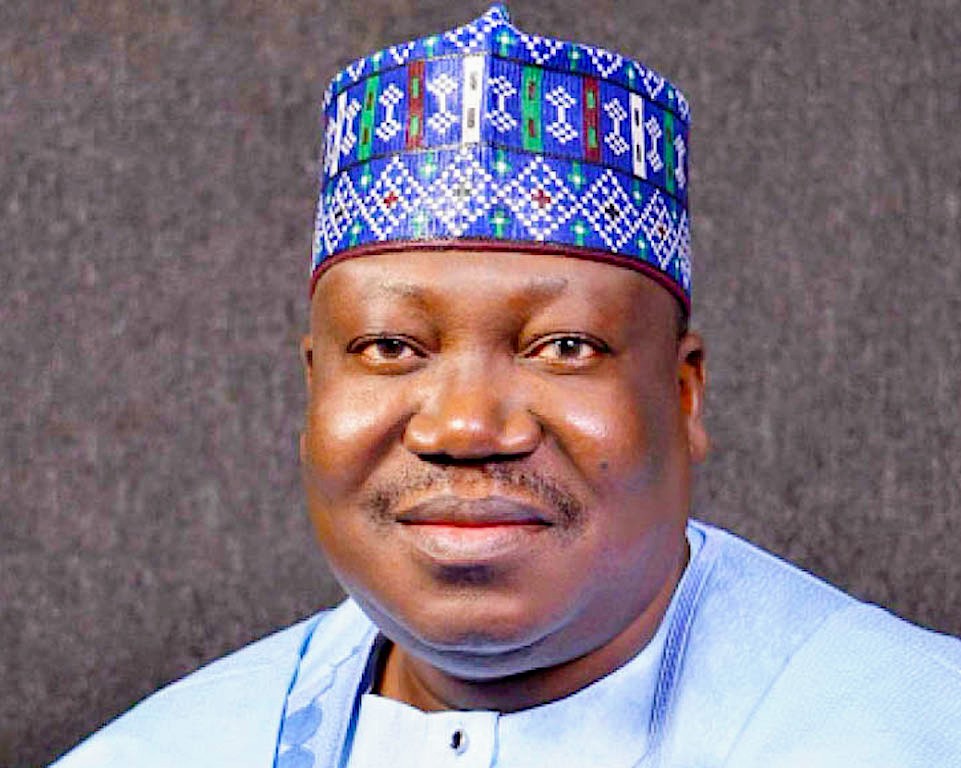
Of course, these revelations have triggered a wave of emotive and sometimes carefully considered reflections. In the dust of some of the most sensational revelations, some of the more nefarious shenanigans are quietly sailing under the radar. One of these is the alleged attempts by former Senate President Ahmad Lawan, or people acting for his benefit, to use duplicity and forgery to secure the APC presidential ticket.
In the run-up to the APC primaries in 2022, many Nigerians were surprised when reports emerged that Buhari, who had hitherto remained aloof to the question of his succession, had plonked his weight behind Senator Lawan, a complete outsider in the presidential race. Lawan’s nomination, if it had happened, by replacing Buhari, a northerner, with another northerner, would have been a violation of the principles of power shift. Beyond that, Omole’s revelation, if true, suggests that a serious crime might have occurred during that attempt to use subterfuge and intrigue to capture power.
Senator Ahmad Lawan had been in parliament since Nigeria’s return to democracy in 1999 when he was voted into the House of Reps from Yobe State, before being elected senator in 2007. He presented as a technocrat, academic, and legislator, and as Nigeria’s 14th Senate President was accused of leading a house that acted as a rubber stamp for the Buhari administration. The only time he went against Buhari was the Senate’s opposition to Buhari’s request to amend Section 84 (12) of the Electoral Act, which prevented political appointees from contesting elections at the party primary level without resigning. This was in March 2022. A few months down the line, the man who championed the electoral reform would be embroiled in electoral manipulations, which, as Omole’s book reveals, may have involved forging a presidential directive.
Section 467 and its various subsections (1), (2), and (3) of the Criminal Code prescribe various punishments for forgery, classified as a felony under Nigerian law, ranging from three years’ imprisonment up to 14, for forging signatures or orders of the president and governors, and in some cases, up to life for forging the seals of the federal and state government.
Omole’s book alleges several instances of people around the president forging presidential orders, including an instance reported by Fatima Buhari that some people around her father, the president, forged his signature.
What was concerning about this was that despite these issues being brought to the president’s attention, criminal investigations were never initiated against these alleged forgers, as the president decided to turn a blind eye.
The most glaring example of this, of course, was the claim by the then Inspector General of Police, Alkali Baba, as chronicled in Dr Omole’s book, that he was presented with a forged presidential directive by Buhari’s aides ordering the IGP, the Directors of the Department of State Services (DSS), and the National Intelligence Agency (NIA) to impose Lawan as the APC’s consensus presidential candidate. Suspicious of this directive, the IGP, along with the directors, quickly arranged to see the president to verify, and Buhari outrightly said, “I have given no such order.”
Whether Lawan, at whose residence there had been celebrations of his reported “presidential endorsement,” knew of the alleged forgery of this directive is something that has not been established yet; what is clear, though, is that he stood to be the beneficiary of it if it had gone through.
The implication of the alleged forgery is significant. It was an orchestrated attempt to subvert party politics and the democratic process by commandeering sensitive state apparatus to arm-twist the process and impose candidates on Nigerians.
What is most irksome in this narrative, though, is the levity with which it was treated. While Buhari, as the accounts suggest, was clear about not wanting the security agencies to intervene in the process, he did not seem concerned that his aides would forge a directive and ascribe it to him.
While IGP Alkali Baba was quick to spot the directive as a forgery, once it was verified to be so, it would seem his policing instinct abandoned him. What his duty required of him was to immediately launch an investigation into the alleged forgery, arrest any indicted parties, and prosecute them according to law. For reasons no one cared to elaborate on, neither the president nor the IGP seemed to think this was necessary. This is something that Nigerians should be concerned about.
Immediately after this palace coup was averted, Senator Lawan pivoted to reclaim his senatorial seat. The problem, though, was that he was already scrambling for the presidential seat that he neglected to run for re-election in his Yobe North senatorial constituency. In his absence, Bashir Machina had secured the APC ticket after winning the party primaries.
What happened next has been described by some analysts as a ticket heist. The APC in Yobe State refused to submit Machina’s name to the electoral commission and instead submitted that of Lawan, who did not participate in the primaries.
A whole circus followed to legitimise Lawan’s nomination. The party claimed to be holding fresh primaries, which Machina disputed, reporting that he was being intimidated, threatened, and pressured. He went to court and secured victories at the Federal High Court and the Court of Appeal, but the Supreme Court quashed these victories on procedural grounds, not on merit, therefore allowing Lawan to return to the Senate. After the legal rigmarole, the democratic cost is that a legitimately elected candidate was denied his mandate on the grounds of subterfuge and court procedure.
The pattern that emerges from both instances shows a willingness to circumvent the democratic process, sometimes involving acts that, if proven to be true, qualify as criminal offences. Alleged forgery of a presidential directive is not a matter to be waved aside like a pesky mosquito, as President Buhari and IGP Alkali had done, and while the alleged ticket snatching might have had some legal backing, it does not suggest that rules meant to serve all of us should be circumvented by certain people for their personal benefit. The corruption of processes, by any parameter, is as dangerous and disingenuous as fiscal corruption. Lawan’s dual controversy, as alleged in Omole’s book, overrides both ethics and party democracy.
Ironically, though, Senator Lawan, who has a track record of refuting allegations against him, seems to have chosen silence this time. In 2021, when he, alongside others, was alleged to have taken a sizeable bribe to expedite the passage of the controversial Petroleum Industry Bill despite strong public resistance to some of the bill’s provisions, he denied the allegations. Earlier this year, his aides were swift in responding to allegations that the senator had had security operatives arrest Ishe’u Ibrahim Jadda over his criticism of the Lawan-facilitated Gashua Water Supply project. On this matter, neither the senator nor his aides have bothered to respond or offer clarification. And text messages sent to him for his reaction have remained unanswered.
I find this silence strange. Is this a misplaced hope that the allegation, with its gravitas and implications, would be buried under the more sensational claims in the book, even if it fosters the idea that in Nigeria’s democracy, might is right and that lawmakers, especially one whose finest moment was championing electoral law, would reportedly subvert these laws for his benefit?
Like the dog in Aesop’s fable, Lawan’s grasp for the big bone of the presidency resulted in a disaster. In overreaching, he might have lost the credibility he had built his political bravura on. However, unlike Aesop’s dog, who learned his lesson in solitude, Senator Lawan continues to serve in the chamber where he once presided.
The larger implication of IGP Baba’s revelations in Omole’s book is that things happened in the Buhari administration that need investigating, and sweeping them under the carpet for political convenience will continue to undermine our democratic institutions. If anyone could forge presidential directives that would require turning the security agencies against the people and their will to serve their personal ambition and get away with it, then we are all subject to the will and dangerous ambitions of such people.
Sirajo, a public affairs commentator, writes from Lambatta, Niger State. He can be reached through rahmansurajbata@gmail.com, 08069219000 (SMS only)
