

By Ojima-ojo Abubakar
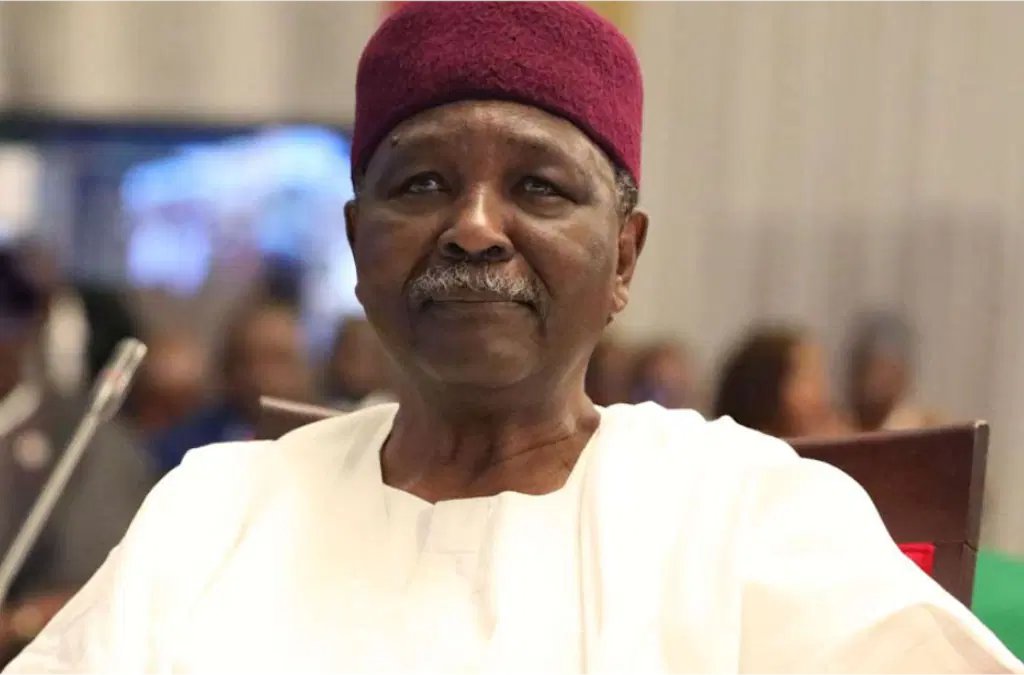
Former Head of State, Yakubu Gowon, has recounted how fear, betrayal and growing distrust consumed the final days of his government before the July 29, 1975 coup, warning that leaders who surrender to panic and suspicion often end up trapped by manipulative advisers, opportunists and their own fears.
But beyond the military intrigue and intelligence briefings, Gowon’s autobiography, ‘My Life of Duty & Allegiance’, also tells a quieter and more haunting story; that of a ruler who suddenly found himself alone in a Kampala hotel room, no longer thinking about power or statecraft, but about where his displaced family would now live.
“The reality that I was out of office dawned on me early enough when I left the conference hall and had a few moments alone with myself in my hotel room in Kampala.
“I began to think about the future and where to settle my family, who, like me, had become unprepared and reluctant sojourners in foreign lands,” Gowon wrote.
The reflections, drawn from Gowon’s account of the events surrounding his overthrow while attending the Organisation of African Unity, OAU, summit in Kampala, Uganda, offer one of the clearest insider accounts yet of the emotional burden of power during Nigeria’s long years of military rule.
“Any leader who lives in fear and acts on every rumour of plots to remove him or her from office can hardly accomplish anything.
“On the contrary, he could succeed only in turning himself into a prisoner of wily and self-serving advisers, then to secure the services of legions of ‘prophets’ and ‘marabouts’ who would claim to possess enough information to feed his fears,” Gowon wrote.
‘Leadership Followed One Home’
For Gowon, rumours of coups and conspiracies had become part of everyday governance after the military entered politics in January 1966.
He stated, “From the night of January 15, 1966 when the military made its incursion into governance in Nigeria, it became routine to instinctively associate ‘something’ with a coup d’état in the works.
“Besides, from the moment I assumed office on Monday, August 1, 1966, I had learnt to live with persistent rumours of plans to unseat my government.”
Yet the memoir makes clear that the real burden of leadership extended far beyond military briefings and official ceremonies.
Behind the public image of authority was a household living quietly under tension as intelligence reports multiplied and trust within the military hierarchy weakened.
Friends became possible suspects. Routine military movements suddenly acquired political meaning. Every unusual conversation carried fresh anxiety.
“Leadership during those years was not merely a public responsibility. It was a condition that followed one home,” Gowon reflected.
At the centre of that strain was his wife, Victoria Gowon, and a family that could instantly become vulnerable if the fragile political balance collapsed.
Though Gowon avoided sensational details about private family life, his memoir repeatedly hints at the emotional pressure borne quietly inside the household during those uncertain years.
“There are moments in leadership when one carries burdens that cannot easily be discussed even within the family,” he wrote.
The Rumours That Would Not Go Away
Sometime in early 1975, Gowon said increasingly specific intelligence reports began reaching him from different sources warning that officers from the old Northern Region were plotting to overthrow his government.
“Early 1975, I received clear warnings from several sources that ‘our boys’ were up to something. I easily understood the reference to ‘our boys’ to mean young military officers from the old Northern Region,” he wrote.
At first, he dismissed the reports as part of the endless rumours that circulated within military circles. But the warnings became too persistent to ignore.
“Commissioner of Police D. Yusuf, who was my chief security officer and head of the Special Branch responsible for intelligence gathering, told me some officers were planning a coup d’état and that they even boasted of their readiness to take over power while I was in Kampala,” Gowon recalled.
Initially, Yusuf refused to identify the officers allegedly involved and only referred to them as “Yoran mu ne (Hausa word for) our boys.”
When he later mentioned the names of Col. Joseph Nanven Garba and Col. Anthony Ochefu, Gowon admitted he was deeply unsettled. Both men occupied highly sensitive security positions close to the Head of State.
“As Commander of the Federal Guards, which is the elite unit entrusted with the responsibility of protecting the person of the Head of State, Garba was supposed to have unquestionable loyalty.
“Apart from his proven professional ability, he was appointed head of the Brigade of Guards because of his filial relationship with my mother’s family in Benue-Plateau State,” he wrote.
‘I Was Genuinely Fond Of Him’
The allegations against Garba struck Gowon with particular force. He disclosed that he had personally identified Garba years earlier during a military parade and helped shape his rise within the army hierarchy.
“Years before Garba’s appointment and while I was Adjutant General of the Nigerian Army, I had spotted him during a Parade of Colours and recommended him to join the Federal Guards. Indeed, it was an open secret amongst officers that I was genuinely fond of him,” he wrote.
Gowon admitted that his closeness to Garba partly influenced his reluctance to immediately accept the allegations against him.
“My irritation with the rumours grew when it appeared that my inclination not to accept that Garba and Ochefu were the brains behind the alleged plot temporarily stemmed the flow of information.
“Despite my instruction and demand that Yusuf should avail me more evidence that would make it possible for me to take an informed decision, nothing fresh was unearthed,” he stated.
Still, the atmosphere around the government continued to tighten under the weight of suspicion and uncertainty.
“A fearful leader loses the ability to distinguish truth from manipulation. He begins to govern not through judgment but through anxiety,” Gowon warned.
The Confrontation Before Kampala
Eventually, Gowon summoned both Garba and Ochefu before leaving for Uganda. Garba appeared. Ochefu did not.
“Garba answered my summons, but Ochefu conveniently made himself unavailable. He still did not show up after my Aide-de-Camp personally delivered my instructions to him to appear. His uncharacteristic, yet deliberate act of gross disloyalty made me sense the plot might be true. I made a note to revisit the issue on my return from Kampala,” Gowon wrote.
Still, he chose not to arrest the officers. Instead, he confronted Garba directly in what became one of the most dramatic scenes in the memoir.
He wrote, “I looked Garba in the eye during my meeting with him and confronted him with news of his alleged involvement in the conspiracy against me.
“I told him the plot was brazen and, if true, he and his conspirators had better execute it whilst I was out of the country.”
Then came the warning: “If you boys want to take over, you can try. If you succeed, you can call it your ‘revolution’ and you can do whatever you want. But if you fail, you can rest be assured that I will not be as considerate as I had hitherto been, and all will pay the consequences,” Gowon recalled telling him.
The Summit That Changed Everything
Despite the danger around him, Gowon said he still proceeded to Kampala because he believed Nigeria’s diplomatic responsibilities in Africa were too important to abandon.
“More significant to my decision to be in Uganda was our determination to secure the support of other African leaders in Angola’s quest to achieve independence from Portugal,” he wrote.
But while he attended the OAU summit, the coup he had repeatedly been warned about finally happened. On July 29, 1975, officers led by Joseph Garba announced the overthrow of his government, ending Gowon’s nearly nine-year rule without bloodshed.
Yet the memoir suggests the real emotional collapse came after the speeches, ceremonies and official announcements had ended.
Away from the cameras and diplomatic protocol, Gowon suddenly found himself confronting an unfamiliar reality, life after power.
Alone In A Kampala Hotel Room
“The reality that I was out of office dawned on me early enough when I left the conference hall and had a few moments alone with myself in my hotel room in Kampala,” Gowon wrote.
Only hours earlier, he had stood among Africa’s most powerful leaders as Nigeria’s Head of State. Now, alone in the quiet of a hotel room far from home, his thoughts shifted from matters of state to the uncertain future facing his wife, children and family.
“I began to think about the future and where to settle my family, who, like me, had become unprepared and reluctant sojourners in foreign lands,” he wrote.
The line remains one of the most emotionally revealing passages in the memoir. Within hours, the presidential household had become a displaced family uncertain about where home now existed.
The memoir captures the strange silence that follows the collapse of power, the abrupt transition from commanding a nation to quietly worrying about shelter, safety and survival.
“I needed a temporary abode from where I would travel to the UK to meet my family to discuss plans for our new life,” Gowon wrote.
There were no dramatic vows of revenge. No grand declarations. No attempt to romanticise his fall.
Instead, Gowon’s account carries the quiet shock of a man suddenly stripped of certainty and trying to adjust to an unfamiliar life beyond office.
A President Suddenly Searching For Refuge
That loneliness was softened somewhat by sympathy from fellow African leaders attending the summit.
“President Ahmadou Ahidjo of Cameroon was particularly distressed by what befell me during the OAU summit. He promptly offered me a stay in his country pending my final decision on what to make of the years ahead,” Gowon wrote.
The offer carried enormous emotional significance. Only hours earlier, Gowon had presided over Nigeria’s vast state machinery. Suddenly, he was weighing temporary refuge and trying to rebuild life for his displaced family.
‘Prophets’, ‘Marabouts’ And Fear Around Power
The autobiography also reflects on how fear around power often attracts opportunists who exploit insecurity for influence and access.
Gowon wrote, “On the contrary, he could succeed only in turning himself into a prisoner of wily and self-serving advisers, then to secure the services of legions of ‘prophets’ and ‘marabouts’ who would claim to possess enough information to feed his fears.”
He further disclosed receiving a memorandum from Navy Commander Michael Dabo accusing senior officers of corruption and recommending extraordinary powers for selected officers, including Garba and Ochefu.
“He went on to recommend that I should delegate powers to him as well as to Garba and Ochefu, whom he considered sufficiently trusted, to enable them, on my behalf, deal with the officers he had accused.
“My goodness gracious. This got me terribly upset and terribly angry with him and, indeed, the Commander of the Brigade of Guards,” Gowon recalled.
To him, the proposal reflected how fear could weaken leadership and tempt rulers into surrendering legitimate authority to ambitious subordinates.
“Any leader who permitted this sort of thing would automatically have signed off his own death warrant, undermined his own authority and irrevocably programmed his country to self-destruct,” he wrote.
The Human Cost of Losing Power
For historians, the memoir offers one of the clearest first-hand accounts yet of the tense final days of the Gowon administration and the emotional devastation that followed his removal from office.
But beyond the military intrigue and political betrayal lies something more enduring, the deeply human story of a leader confronting exile, uncertainty and the painful task of rebuilding family life after power disappeared overnight.
And perhaps the most haunting image in Gowon’s account is not the coup itself, but the quiet moment afterward: a former ruler alone in a Kampala hotel room, thinking not about power lost, but about a displaced family and an uncertain future in foreign lands.
