

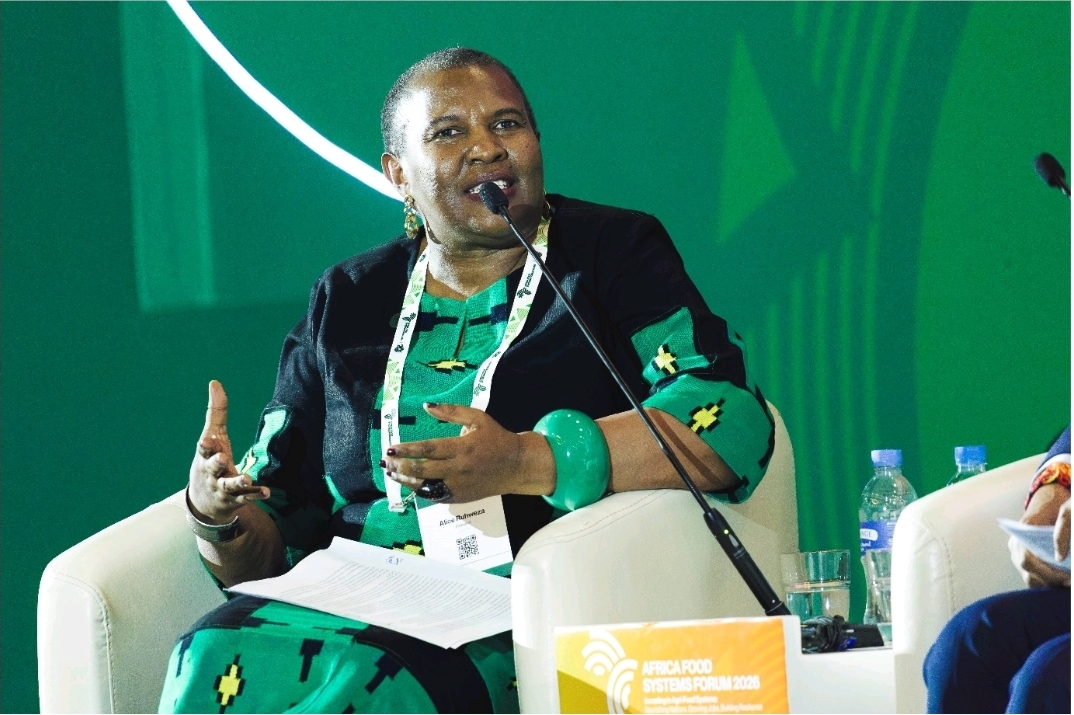
KIGALI, RWANDA — When AGRA President Alice Ruhweza stepped onto the opening plenary panel at the 20th Africa Food Systems Forum Summit, her remarks signaled a decisive shift in how Africa’s premier agricultural institution defines its purpose and measures its ultimate impact.
Appearing alongside continental leaders as the forum marked two decades since Kofi Annan’s foundational call to action, Ruhweza directed the discussion away from historical milestones toward an uncompromising blueprint for the next decade of implementation. She positioned AGRA not as an enduring manager of rural development programs, but as an agile institutional catalyst deliberately engineered to build domestic capability and step back from the center.
Ruhweza’s intervention confronted the familiar pitfall where external development initiatives foster long-term dependency rather than self-sustaining systems. Aligning her perspective with the newly unveiled Africa Agriculture Foresight Report, she outlined an operational pivot that requires AGRA to diagnose binding constraints, test scalable market models, and transfer permanent execution capacity directly to sovereign governments and domestic enterprises.
On the plenary stage, Ruhweza detailed how this institutional philosophy is being translated into everyday practice across the continent. To overcome the chronic implementation bottlenecks that cause well-designed agricultural strategies to falter, AGRA is focusing heavily on strengthening core state systems. By embedding specialized delivery units within agricultural ministries, establishing digital farmer databases, and advising on targeted fiscal incentives—such as duty-free entry for farm machinery and certified seeds—the organization is equipping public institutions to turn broad policy ambitions into structured, bankable investment portfolios.
Beyond the farm gate, Ruhweza zeroed in on what development economists term the hidden middle: the commercial aggregators, local millers, and midstream processors that link rural smallholders directly to expanding urban food demand. She argued that field productivity gains will never generate durable rural wealth if local processing businesses remain paralyzed by working capital deficits and crippling generator fuel costs. Under her strategic guidance, AGRA is scaling blended finance facilities and risk-sharing instruments that enable local agribusinesses to adopt off-grid solar infrastructure, set up certified seed testing laboratories, and offer reliable, contract-backed purchase agreements to surrounding farmer cooperatives.
As African governments align their national expenditure frameworks behind the post-Malabo Comprehensive Africa Agriculture Development Programme 2026–2035 Strategy, Ruhweza framed AGRA as the vital operational bridge between continental declarations and private commercial capital. She emphasized that unlocking the continent’s projected one-trillion-dollar food economy will require abandoning scattered, short-term pilots in favor of integrated value-chain investments where patient capital meets investment-ready local enterprises.
Ruhweza’s panel contribution provided the practical foundation connecting high-level presidential commitments to the daily economic incentives of rural producers. As she steers AGRA into its third decade of operation, her mandate from the Kigali summit establishes a clear standard for institutional accountability. She certainly reminded stakeholders that true leadership is not demonstrated by expanding an organization’s footprint, but by leaving behind national food systems that are resilient, self-funding, and entirely self-sufficient.
