

KIGALI, RWANDA — In one of the most definitive policy declarations at the Africa Food Systems Forum (AFSF) 2026, the Federal Government of Nigeria put hard fiscal figures behind its commitment to agricultural transformation, revealing a historic expansion in public financing designed to transition domestic agriculture from a social sector intervention into a primary engine of macroeconomic security.
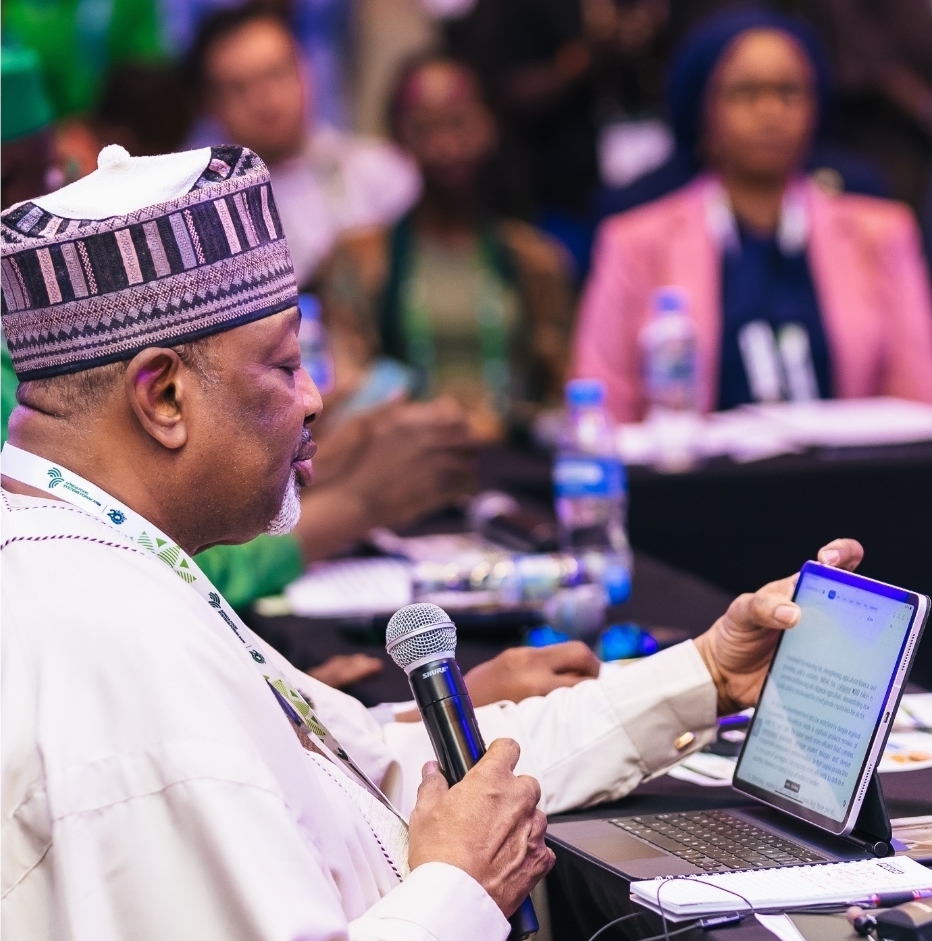
Speaking during a high-level ministerial roundtable in Kigali, Nigeria’s Minister of Agriculture and Food Security, Senator Abubakar Kyari, outlined the unprecedented trajectory of the country’s agricultural financing. From an allocation of ₦362 billion in 2024, the federal capital envelope jumped to ₦1.2 trillion in 2025, with fiscal projections expanding further toward nearly ₦1.5 trillion in 2026.
For Kyari, the geometric growth in budget allocation reflects a fundamental redefinition of national priorities as African leaders meet to domesticate the post-Malabo Comprehensive Africa Agriculture Development Programme (CAADP) 2026–2035 Strategy and Action Plan.
“In our region, resilience is not an abstract policy concept,” Kyari told fellow ministers, development finance institutions, and private-sector leaders. “It is the difference between a farmer planting a crop or abandoning his field; between a rural community remaining productive or becoming displaced; and increasingly, between national stability and insecurity. For Nigeria, agricultural resilience is an economic, environmental, and national security imperative.”
The Minister explained that the era of treating food production purely as farm-gate labor has ended. Instead, federal interventions are now framed under a comprehensive 10-year strategy directly aligned with continental CAADP pillars and sub-regional development pacts, ensuring that public resources directly crowd in commercial capital and strengthen value chain efficiency.
“The question of food security extends far beyond the perimeter of the farm,” Kyari emphasized. “It is a fundamental macroeconomic and governance issue. That understanding informs our targeted deployment of capital—focusing on de-risking agricultural finance, scaling climate-smart inputs, expanding digital extension, and delivering reliable irrigation infrastructure.”
A central pillar of this transformation is Nigeria’s institutional collaboration with technical partners like AGRA. Under continental CAADP guidelines, public budget expansions often risk falling into operational bottlenecks without strong state capability to manage and deliver complex programs. AGRA’s partnership with the Federal Ministry of Agriculture and Food Security (FMAFS) has provided the technical backbone to institutionalize policy reforms, deploy digital farmer registries, improve seed system regulations, and coordinate investment planning.
This state-capability partnership was on display at the Forum, where the Nigerian delegation showcased major flagship programs, including the Irrigate Nigeria initiative. Backed by the Federal Government with AGRA serving as core technical partner, the initiative targets turning underutilized national water infrastructure into performance-driven production clusters, starting with a $210 million pilot covering 30,000 hectares and 8,000 farmers across four states, with the potential to scale into a US$6 billion commercial footprint spanning 1 million hectares and 360,000 farmers nationwide.
Strategic partners at the Forum noted that Nigeria’s fiscal escalation provides an operational model for how African governments must take ownership of their food systems amid a sharp global decline in traditional foreign development assistance.
Kyari pointed out that by restructuring public lending windows, capitalizing the Bank of Agriculture (BOA), and de-risking the ecosystem, public investments are already unlocking hundreds of millions of dollars in private agribusiness capital.
“Our task is to ensure our agricultural ecosystem is defined not by vulnerability, but by what our land, our markets, and our young people can produce,” Kyari concluded. “By linking policy clarity, domestic budgetary commitment, and strong institutional partnerships, we are putting Nigeria on a predictable path to food sovereignty and long-term economic stability.”
From billions to trillions: How Nigeria’s agriculture budget expansion and continental alignment are anchoring CAADP delivery

Related Posts
Add A Comment
© 2026 Nexter News