
Close Menu
    What's Trending

    NARTO: Subsidy removal, local refining stabilising naira

    Reform gains must be felt in everyday life, BudgIT tells FG

    From program implementer to systems catalyst: Alice Ruhweza redefines AGRA’s third decade

    Facebook X (Twitter) Instagram
    Facebook X (Twitter) Instagram
    Nexter News Nigeria
    • News
    • Politics

      Katsina Residents Back Atiku, ADC Over Plan to Restore Petrol Subsidy

      August 23, 2026

      Osun election: KDI flags BVAS failures, vote buying, result gaps

      August 21, 2026

      ADC group vows to deliver Katsina for Atiku, Kaita

      August 15, 2026

      Accord factional chair Imumolen withdraws from presidential race, backs Tinubu

      August 6, 2026

      Advisory council inaugurates 26 LGA coordinators for Wadada’s 2027 guber bid in Nasarawa

      August 1, 2026
    • Business

      NARTO: Subsidy removal, local refining stabilising naira

      September 3, 2026

      Reform gains must be felt in everyday life, BudgIT tells FG

      September 3, 2026

      NUPRC CEO: Falling offshore investments raise skills gap fears in Nigeria’s oil sector

      August 21, 2026

      22 offshore projects to attract $30bn investment by 2030, says NUPRC CEO by

      August 6, 2026

      Dangote to donate one-third of his wealth to charity, daughter reveals

      July 28, 2026
    • Sports
    • Features
    • Agriculture
    • Nexter Media
      • NEXTER Radio/FM
      • NEXTER TV
      • Podcast
    Nexter News Nigeria
    Home»Opinion»Beyond declarations: How Africa’s leaders are anchoring CAADP 2026–2035 on state capability and institutional discipline
    Opinion

    Beyond declarations: How Africa’s leaders are anchoring CAADP 2026–2035 on state capability and institutional discipline

    Tahir AhmedBy Tahir AhmedSeptember 3, 2026No Comments3 Mins Read
    Share WhatsApp Telegram Facebook Twitter LinkedIn Copy Link
    Follow Us
    Facebook Instagram
    Share
    WhatsApp Telegram Facebook Twitter LinkedIn Copy Link

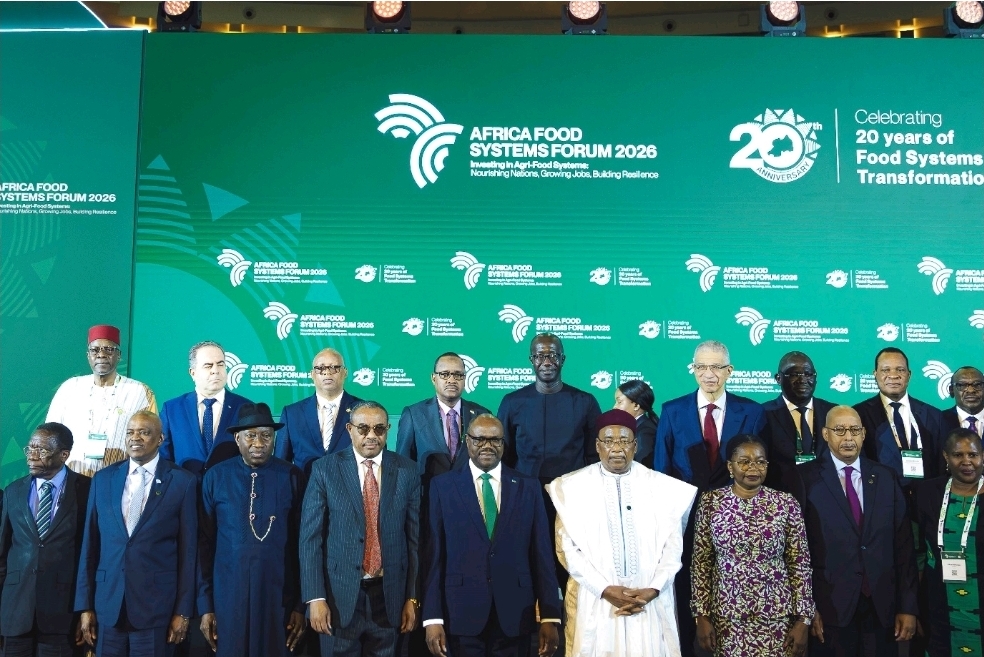
    When African heads of state and agricultural ministers gathered in Kigali for the 20th Africa Food Systems Forum Summit, the customary celebration of continental policy declarations gave way to an overdue conversation on execution. Across the opening plenary, continental leadership converged on a blunt conclusion: Africa’s post-Malabo agricultural goals under the Comprehensive Africa Agriculture Development Programme (CAADP) 2026–2035 Strategy will collapse unless governments fundamentally upgrade state capability and institutional governance.

    Delivering the official opening keynote address on behalf of President Paul Kagame, Rwanda’s Prime Minister, the Right Honourable Dr. Justin Nsengiyumva, challenged delegates to look beyond the adoption of the Kampala CAADP Declaration and confront the operational mechanics of delivery. Nsengiyumva observed that while the continental framework provides strategic clarity for the next decade, its ultimate success rests on answering three structural implementation questions.

    The Prime Minister asked delegates how African countries can turn political commitments into credible and investable plans that give long-term confidence to capital providers. He questioned how governments can finance integrated food systems rather than isolated components, pointing out that a productive farm quickly fails without roads, energy, irrigation, storage, finance, logistics, processing, and reliable markets. Finally, he challenged leaders on how to take proven solutions to scale across borders, moving beyond promising pilots to nationwide transformation.

    Rwanda’s Minister of Agriculture and Animal Resources, Honourable Dr. Télesphore Ndabamenye, reinforced this delivery imperative, identifying strong and effective governance as the indispensable bedrock of agricultural transformation. Ndabamenye noted that Africa continues to grapple with food insecurity, climate volatility, and high consumer food prices not due to an absence of solutions, but because of weak institutional coordination and fragmented policy implementation.
    He explained that sound governance is what anchors policy direction, aligns inter-ministerial budgets, enforces regulatory accountability, and builds an enabling environment capable of crowding in private commercial capital across entire value chains. Without deliberate investments in state capacity, Ndabamenye warned, continental ambitions will remain unfulfilled promises.

    This demand for delivery discipline was echoed by outgoing AGRA Board Chair and former Prime Minister of Ethiopia, Hailemariam Dessalegn. Reflecting on two decades of continental initiatives, Dessalegn pointed out that the failure of past agricultural programs has often been rooted in a capability trap, where well-formulated national plans fail because domestic institutions, incentives, and delivery mechanisms do not endure once external partners step back.

    Dessalegn charged heads of state to prioritize domestic capability, select a focused set of high-impact national value chains, and treat agriculture not merely as a rural welfare intervention, but as the core macroeconomic engine of national economies. He stated that the next decade cannot be built on scattered, uncoordinated projects that leave behind no lasting institutional architecture.

    For AGRA, this policy consensus validates a long-term strategic evolution. Rather than attempting to serve as a permanent implementer across every district, AGRA’s role across Africa is centered on strengthening state capability. By embedding technical delivery units within agricultural ministries, digitizing national farmer registries, and designing bankable public-private partnership compacts, AGRA is helping sovereign governments build the administrative machinery needed to absorb capital, mobilize domestic resources, and drive long-term CAADP implementation.

    Share. WhatsApp Telegram Facebook Twitter LinkedIn Email Copy Link
    Previous ArticleKatsina ADC Gov Candidate, Kaita, Speaks From Hospital, Thanks Supporters For Prayers
    Next Article From program implementer to systems catalyst: Alice Ruhweza redefines AGRA’s third decade
    Tahir Ahmed

    Related Posts

    From program implementer to systems catalyst: Alice Ruhweza redefines AGRA’s third decade

    September 3, 2026

    AFSF 2026: “Stop calling them beneficiaries” — Mastercard foundation, AGRA push bundled finance to unlock youth agribusiness

    September 1, 2026

    From billions to trillions: How Nigeria’s agriculture budget expansion and continental alignment are anchoring CAADP delivery

    September 1, 2026
    Add A Comment
    Leave A Reply Cancel Reply

    Advertisement
    Latest Posts

    NARTO: Subsidy removal, local refining stabilising naira

    Reform gains must be felt in everyday life, BudgIT tells FG

    From program implementer to systems catalyst: Alice Ruhweza redefines AGRA’s third decade

    Beyond declarations: How Africa’s leaders are anchoring CAADP 2026–2035 on state capability and institutional discipline

    Trending Posts

    From program implementer to systems catalyst: Alice Ruhweza redefines AGRA’s third decade

    September 3, 2026

    AFSF 2026: “Stop calling them beneficiaries” — Mastercard foundation, AGRA push bundled finance to unlock youth agribusiness

    September 1, 2026

    From billions to trillions: How Nigeria’s agriculture budget expansion and continental alignment are anchoring CAADP delivery

    September 1, 2026

    Subscribe to News

    Get the latest sports news from NewsSite about world, sports and politics.

    © 2026 Nexter News
    • Privacy Policy
    • Terms
    • Accessibility

    Type above and press Enter to search. Press Esc to cancel.