

With Japanese-backed Sasakawa support, 18,000 smallholders in Lafia, Obi and Doma prove climate-smart farming works.
By Attayi Mohammed AJOBE
For generations, the logic in Obi was simple: put three or four seeds in one hole, so that if two die, one may live.
This planting season, Jibril Elayo does the opposite. He drops one seed in one hole.
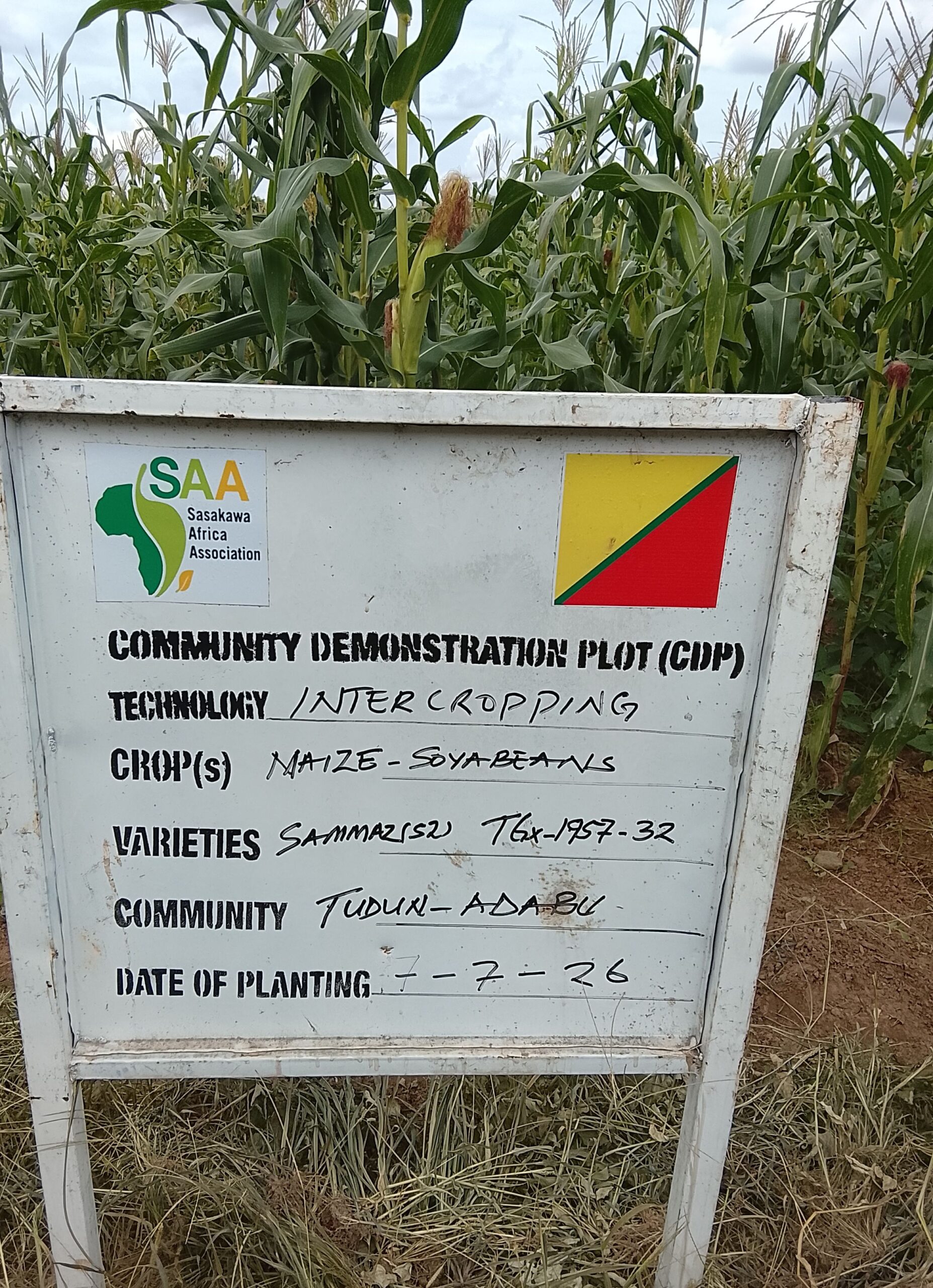
He measures 75 centimetres between rows. 25 centimetres between stands. He plants one seed, covers it, and moves to the next hole.
To any traditional farmer watching, it looks like a risk. To Elayo, it is science.
“Before now, you hardly find a farmer planting one seed of maize per hole. Farmers felt it would not germinate,” he says, standing in his demonstration plot in Tudun Adabu, Obi Local Government Area. “Now we have been introduced to one seed per hole at 25 centimeters between stands. The 4-by-4 rotation between maize and soybean is also new. We are already seeing results in moisture retention and phosphorus uptake in the soil.”
That single seed is at the heart of a quiet revolution spreading across Nasarawa State.
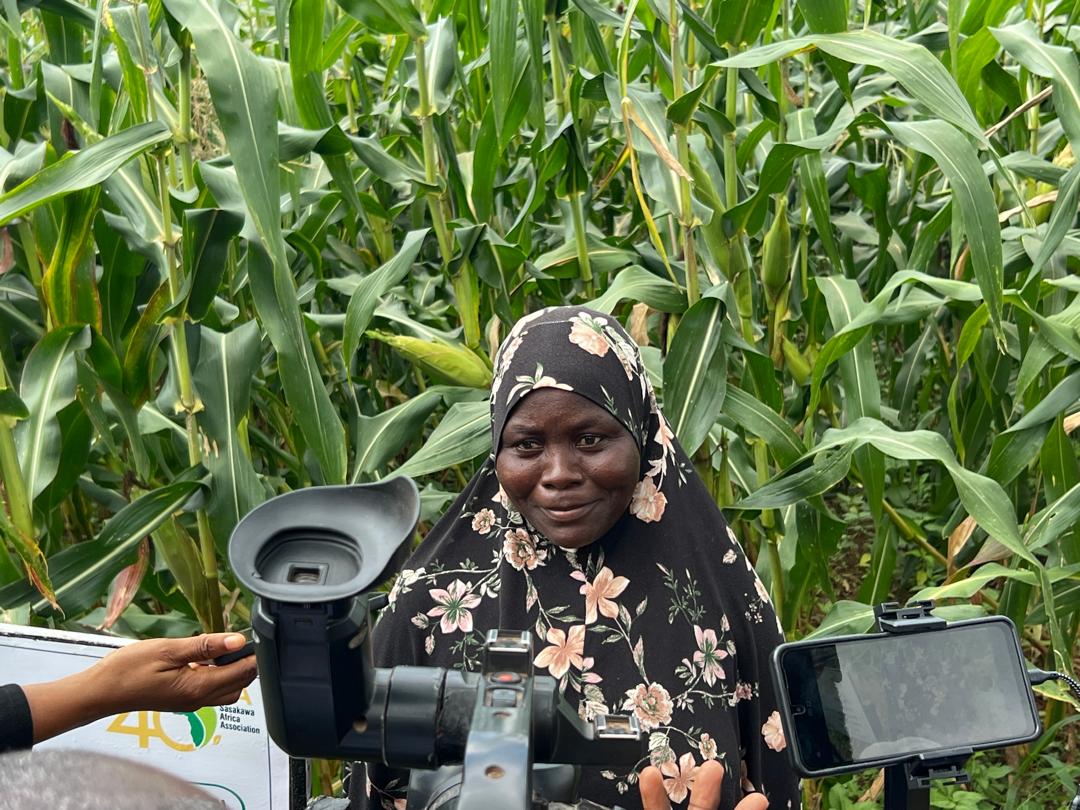
Over 18,000 smallholder farmers drawn from more than 60 cooperatives in Obi, Doma and Lafia LGAs are now farming under a climate-smart model introduced by the Sasakawa Africa Association, SAA, with funding from the Japanese Government. More than 60 farm sites were established for the 2026 planting season alone for improved maize, soybean and Orange-Fleshed Sweet Potato.
The farmers have a simple message for the Federal and State Governments: If you want to feed Nigeria, start with one seed per hole.
The Measurement That Changed Everything
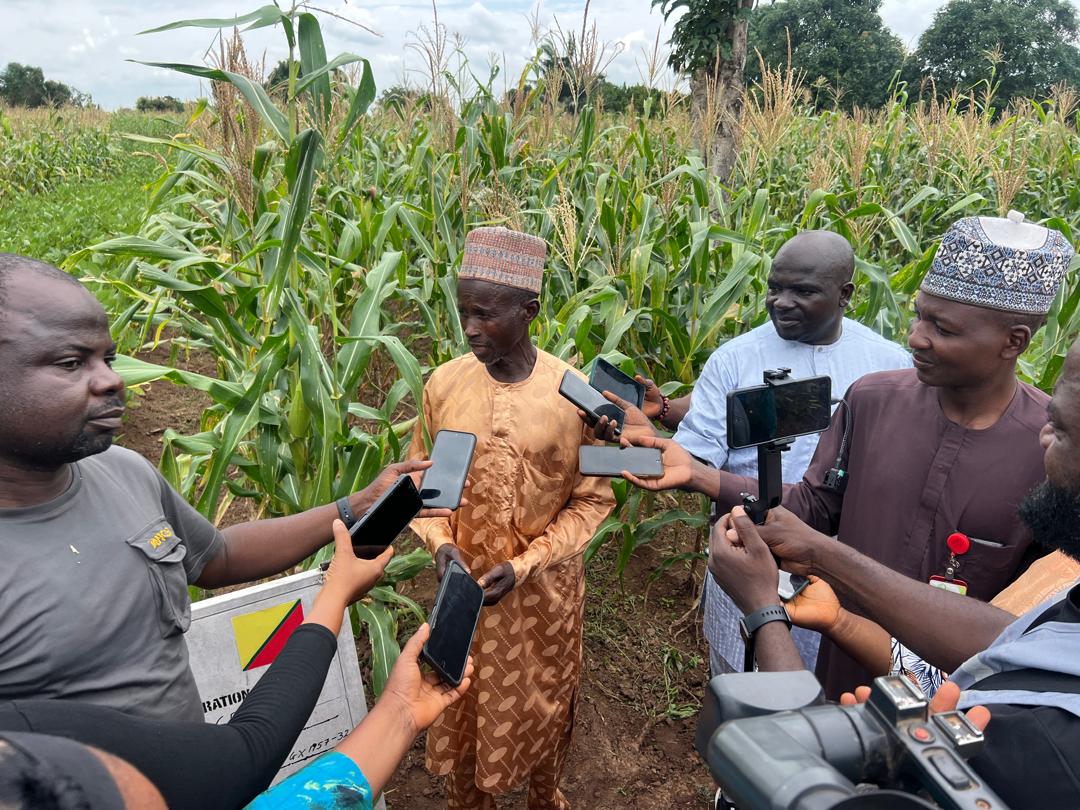
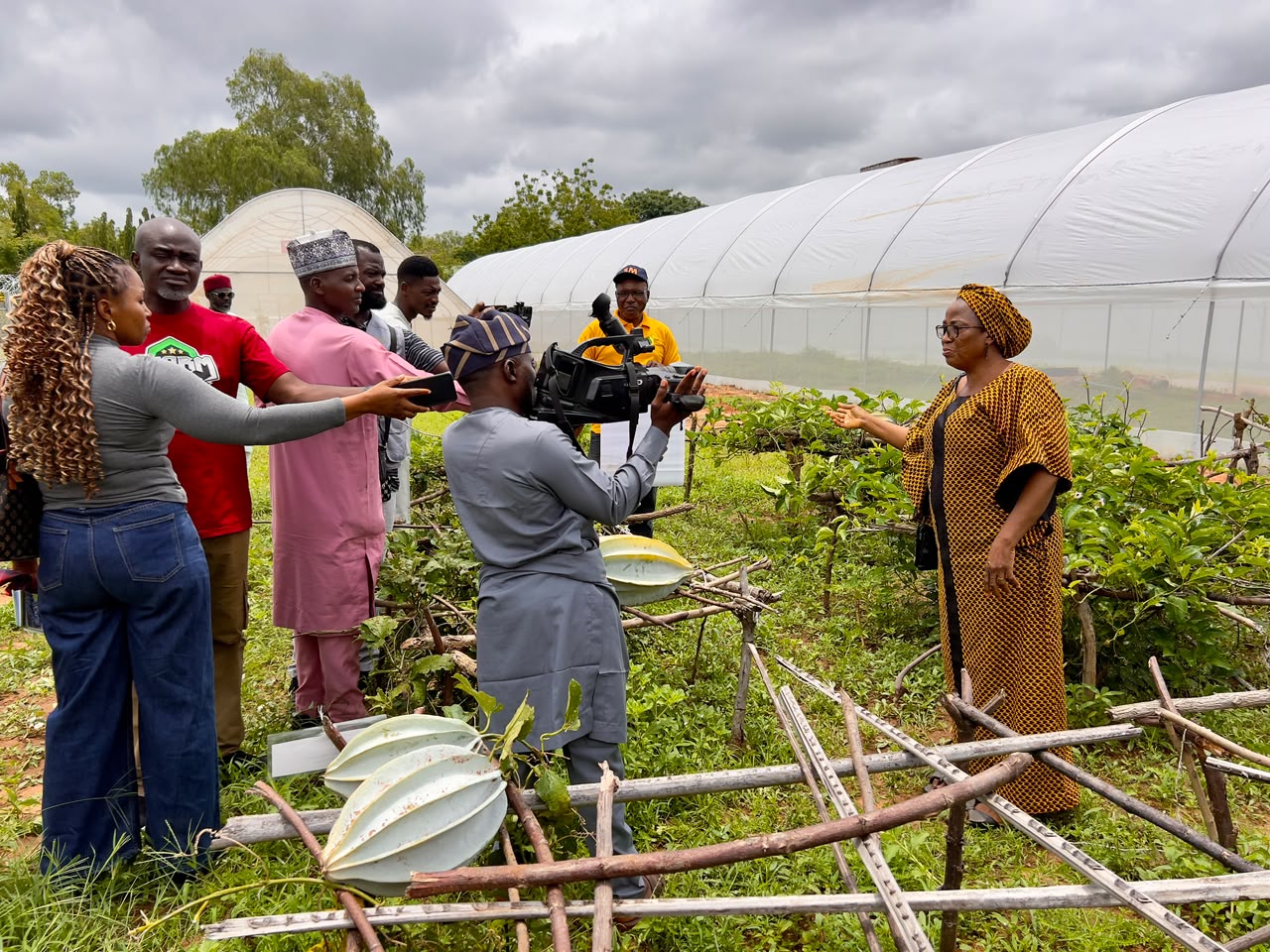
During a two-day media field tour of SAA project sites across the three LGAs, the contrast between the old and the new was visible even before harvest.
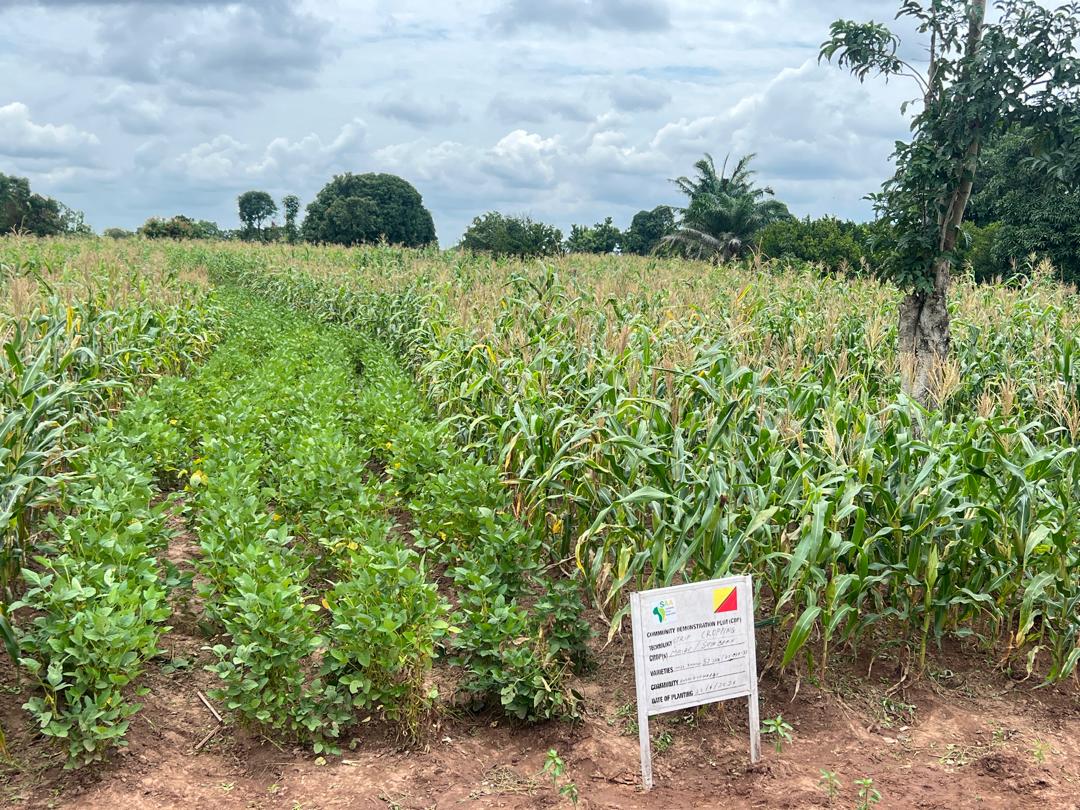
In Obi community, Tudun Adabu and Agwan Hamidu, SAA established soybean/maize intercropping and pro-Vitamin A demonstration plots. The farms do not look like the typical farms around them. They are ordered and precise.
Bashir Ogbole, Chairman of the Ayinewoza Farmers Group, explains why that precision matters in an era of climate change.
“Seriously, we have seen a far difference. We have not even harvested yet, but you can see the difference compared to our own local method,” Ogbole says. “They taught us to plant at 75 centimeters spacing, unlike before when we just planted without measuring distance. The yield will be far better.”
He says the improved seeds distributed by SAA have withstood harsh weather conditions that would have destroyed local varieties. In a season marked by unpredictable rains, that resilience is the difference between harvest and hunger.
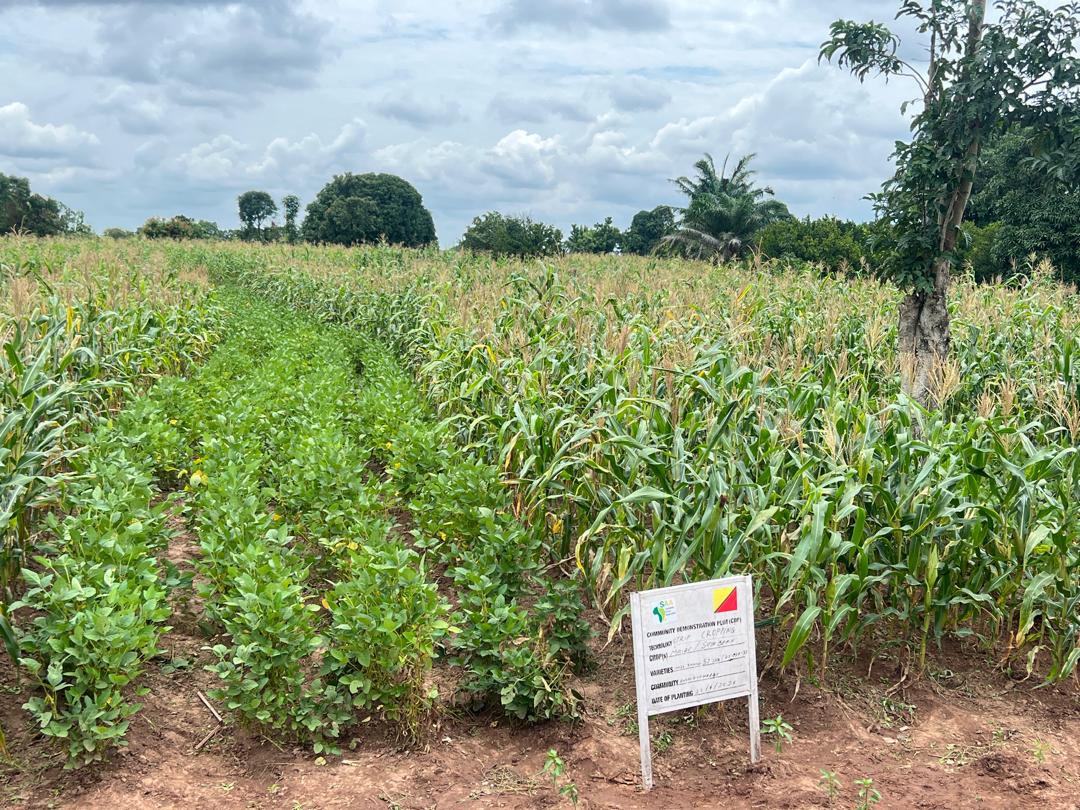
For SAA, that resilience is intentional. The Country Director, Dr. Godwin Atser, represented during the tour by the Technical Coordinator for Climate Resilience and Agrifood Systems, Nathaniel Otene, said the organization ties productivity directly to climate resilience.
“We live in a time when climate change is affecting the entire agricultural production system. There is a need for varieties that can withstand extreme weather. Innovations from research institutions will have limited impact unless they are effectively transferred to farmers,” he said.
He called for increased government investment in agricultural research, extension services, digital agriculture and youth participation to build resilient and inclusive food systems.
More Than Maize
The one-seed-per-hole principle is not just about maize. It is about a new mindset.
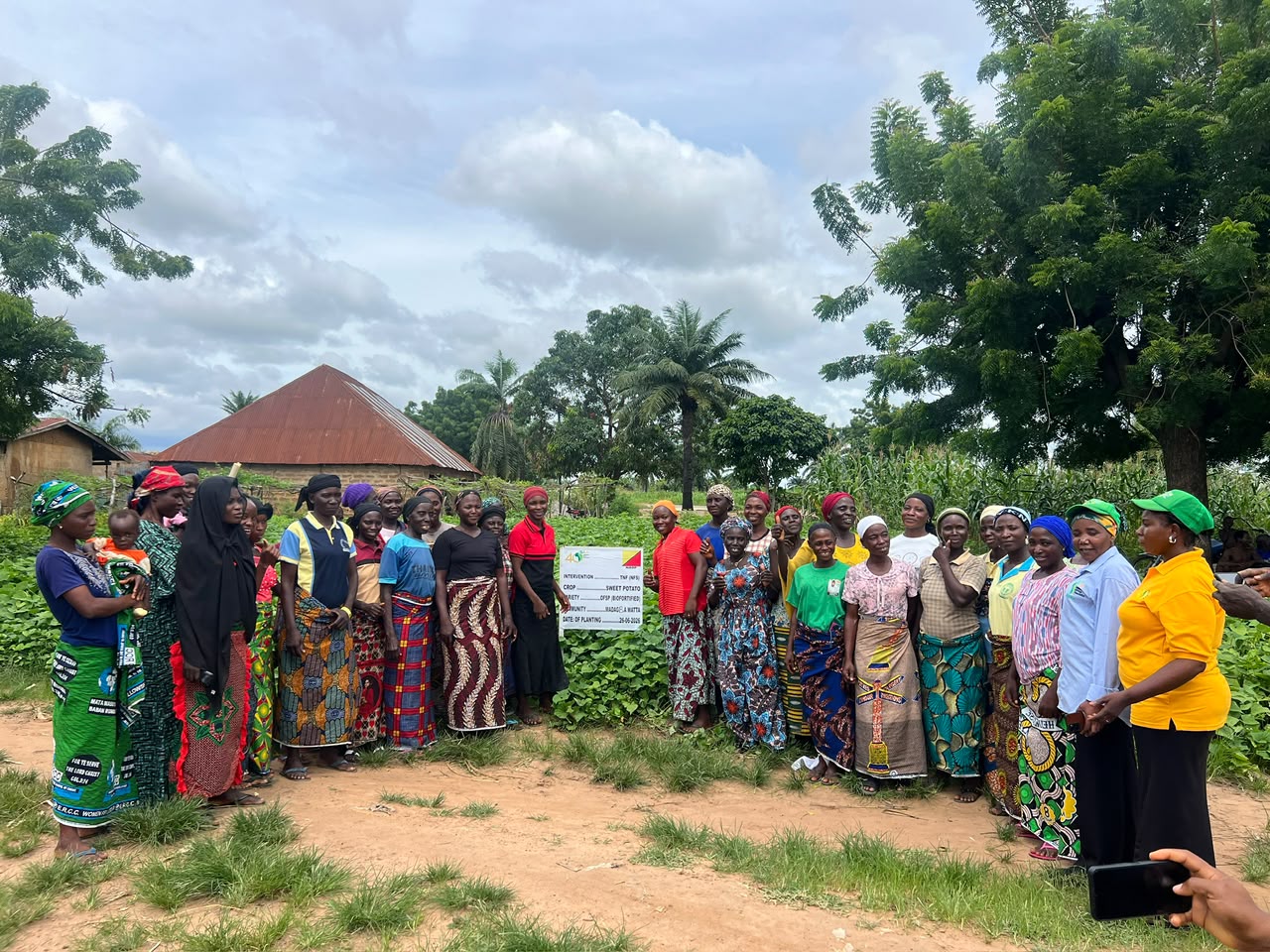
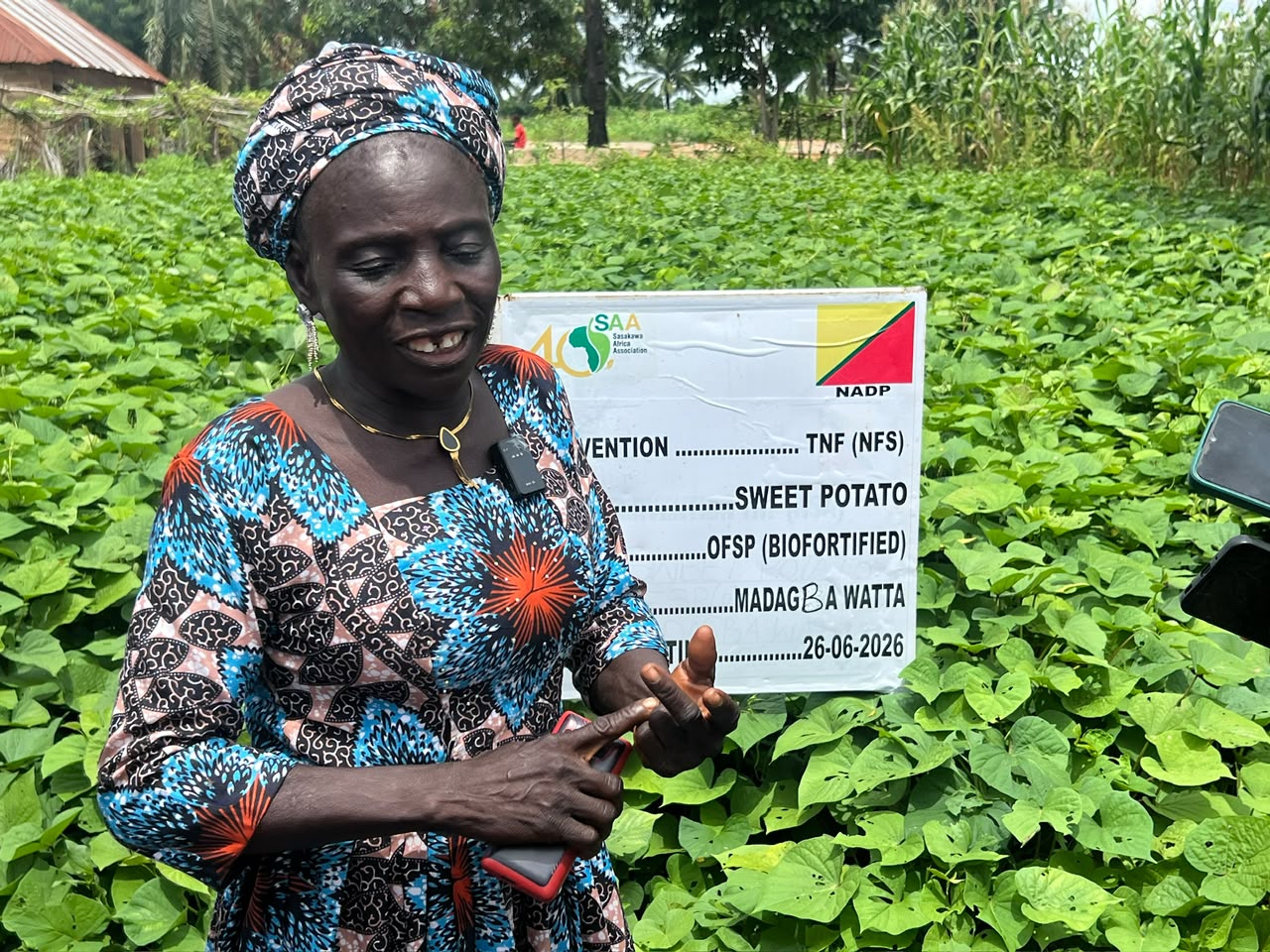
In Madagba Watta, Doma LGA, that mindset is being led by women. Mrs. Felicia Alaku, leader of a women’s group cultivating Orange-Fleshed Sweet Potato, OFSP, says SAA taught them that food security is not just about quantity, but quality.
“They didn’t just give us the vine, they showed us how to prepare it,” she says. “They taught us how to make porridge, juice, how to fry it so our children can take it to school instead of biscuits, and how to boil it with eggs. It is rich in Vitamin A for adults and children. They also taught us storage and field management.”
OFSP is early-maturing, allowing the women to cultivate the same piece of land twice a year — aligning farming with rainfall instead of fighting it. It also puts nutrition directly in the household: Vitamin A for children, income for mothers.
At the College of Agriculture, Science and Technology, Lafia, that nutrition-sensitive approach is being institutionalized. Dr. William Akaamaa, Coordinator of the Family Business Garden established by SAA, says backyard farming is a potent weapon against hunger.
“Food security means good food available in sufficient quantity, accessible and affordable,” he says. “With a small piece of land, a family can produce healthy vegetables, feed itself and sell to neighbours. That is what this garden is doing.”
Outstanding Testimonies
The question is no longer whether the model works. The testimonies from the field are outstanding — a fact acknowledged by the Nasarawa State Ministry of Agriculture and Food Security.
The Permanent Secretary, Hajiya Salamatu Oseze, lauded the partnership between SAA and the Nasarawa Agricultural Development Programme, NADP, describing it as a major boost to food production. She pledged the state government’s support and urged SAA to expand to more rural communities.
The farmers themselves are now the biggest advocates.
Mallam Bashir Alana and Mrs. Felicia Alaku, speaking for their cooperatives, called on governments at all levels to prioritize agricultural extension services, mechanization, and subsidized improved seeds and farm inputs.
Their argued that Nigeria’s food system is powered by smallholders. “If you change how the smallholder plants, you change how Nigeria feeds itself,” they declared.
They were unanimous that the one seed per hole saves seeds. And like experts always highlight, itreduces competition for nutrients. It improves spacing for sunlight and air. Combined with the 4-by-4 rotation between maize and soybean, it improves soil fertility by fixing nitrogen and improving phosphorus uptake. Combined with early-maturing varieties, it allows double cropping.
Enormous Returns
In a country where over 70 percent of food is produced by smallholders still using traditional methods, scaling that small change, it was agreed, is not just an agricultural decision. It is a food security strategy.
From the measured rows of Obi to the orange mounds of Doma, Nasarawa State is proving it is possible.
All it takes is one seed — planted the right way, in the right hole.
